Why Steep Colorado Descents Shred Your Quads and Knees
A 3,000-foot descent is not simply the easy half of a mountain day. It is thousands of repeated braking actions, often on loose rock, uneven steps, and steep switchbacks. Your boots move downhill, but your muscles must constantly prevent your body from dropping too quickly. By the time you reach the trailhead, your quads may feel hot, shaky, and strangely weak. The first few steps beside the car can expose the damage.
The main culprit is eccentric contraction. Your quadriceps stay active while lengthening to control each bend of the knee. Think of them as biological brake pads working for hours. Tailgate stiffness often appears within minutes of stopping, especially after sitting in the car. More serious delayed soreness commonly builds during the next 12 to 24 hours and may peak over the following day or two. If you simply collapse onto the sofa, the muscles cool, the hips tighten, and the knees lose easy movement. The result is a miserable week on stairs when a short, targeted floor routine could have started recovery at home base.
The Biomechanics of the Downhill Thud
Downhill travel increases the demand on the patellofemoral joint, the contact area between the kneecap and thighbone. Depending on the angle, speed, body position, pack load, and individual mechanics, forces through this joint can reach several times body weight, with commonly cited estimates approaching six times body weight during demanding knee-bending tasks. Every deep step adds another compression cycle. A long descent therefore turns a modest irritation into a high-volume stress problem.
The muscle response is different from ordinary fatigue. Eccentric loading can create microscopic disruption within muscle fibers, followed by inflammation, fluid shifts, and sensitivity. This process contributes to delayed-onset muscle soreness, often abbreviated DOMS. The severe eccentric micro-tears associated with unfamiliar or prolonged downhill work are described in this overview of delayed-onset muscle soreness. Tight hip flexors can make the situation worse. If the front of the hip cannot extend smoothly, the pelvis may tip forward and the knee may absorb more forward shear as you descend. Weak or fatigued hip flexors can also alter step control, so mobility alone is not the whole answer. Long-term prevention requires hip, glute, quadriceps, foot, and ankle strength as well as sensible pacing.
Your 20-Minute Post-Descent Floor Protocol
Start within about 90 minutes of unlacing your boots, after drinking fluids and eating a normal recovery meal. The goal is not to force flexibility or attack sore tissue. Use slow pressure, comfortable breathing, and a pain scale that stays mild. Targeted mobility and recovery techniques can help restore hip motion and reduce the compensations that push more work into the knees.
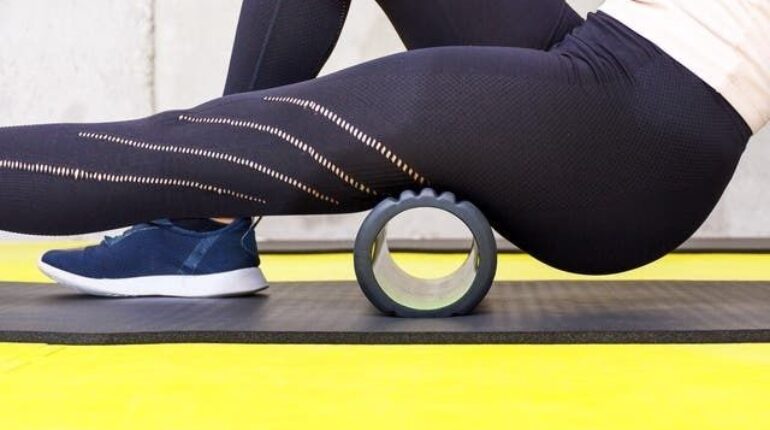
- Down-regulate the quads for four minutes. Lie face down and roll slowly from the upper thigh toward the kneecap, stopping before the joint itself. Use a foam roller, or a soft water bottle if you are still at the trailhead. Pause on tender spots for 15 to 20 seconds, but do not grind aggressively. The purpose is to reduce protective tone and improve your sense of movement, not to crush already irritated fibers.
- Open the rectus femoris with a kneeling couch stretch for three minutes per side. Place one knee near a couch or sturdy chair, with the shin supported behind you. Keep the ribs stacked over the pelvis and gently squeeze the glute on the kneeling side. Move closer only until a clear stretch appears through the front of the thigh and hip. Avoid arching the lower back or forcing the heel toward the buttock.
- Restore gentle patellar motion for two minutes. Sit or lie with the knee relaxed and the quadriceps soft. Using two fingers, guide the kneecap slightly side to side and up and down. The motion should be small and comfortable. Never force a stiff, swollen, or acutely painful joint. Stop if the knee catches, becomes sharper, or feels unstable.
- Finish with active hip mobility for six minutes. Try slow tabletop hip circles, controlled lying hip rotations, or a kneeling lunge into a short half-split rock. Keep the range smooth. These drills wake up the hip stabilizers without demanding another hard workout. If the front of the hip feels chronically fatigued, add strengthening on separate training days, such as controlled hip-flexor holds, marches, bridges, or lateral band walks.
Keep the sequence easy enough that you finish feeling warmer and more mobile, not beaten up again. A stretch should not create numbness, tingling, joint pain, or a lingering increase in symptoms. If kneecap movement feels blocked or the knee is visibly swollen, skip the patellar work and use the red-flag guidance below.
Elevate and Drain with Legs-Up-The-Wall Reset
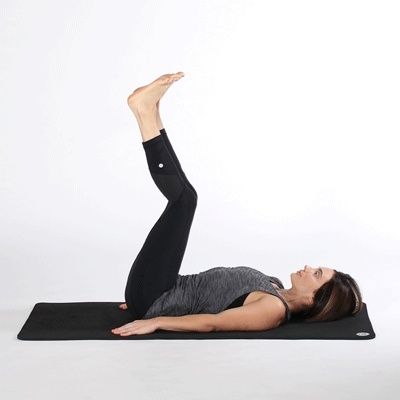
After the mobility sequence, lie on your back with your legs supported vertically against a wall, couch, or the open hatch of a vehicle if privacy and safety allow. Ten to 15 minutes is enough. Elevation reduces the hydrostatic pressure created by standing and may help venous return from the lower limbs. It is not a magical flush for lactic acid, and it does not repair torn tissue overnight. Still, the position can make heavy, congested legs feel more comfortable while the body begins its normal recovery process.
Use slow nasal breathing if it feels comfortable. Inhale for roughly four seconds, then exhale for five or six. Let the abdomen expand without straining. A longer exhale can help shift you away from the alert, sympathetic state created by hard alpine exertion, heat, navigation demands, and the drive home. Evidence on active recovery is mixed and depends on the type of exercise and outcome measured, but this peer-reviewed recovery research supports treating recovery as a combination of circulation, tissue loading, and restoration rather than complete immobility.
- Keep the knees slightly soft instead of locking them straight.
- Move the ankles through gentle circles or ankle pumps every few breaths.
- Take small sips of fluid and include sodium with food when sweating has been substantial.
- Stop if elevation causes numbness, throbbing, dizziness, or a clear increase in pain.
- Use static stretching after the hike, while saving more dynamic mobility and activation for before the next hike.
Immediate Relief Versus Dangerous Red Flags
Not every sore knee needs emergency care. Ordinary post-descent fatigue usually affects both thighs, feels diffuse, and improves slightly once you walk gently or warm up. A problem inside the joint behaves differently. Use the comparison below as a practical screen, not a diagnosis.
| Pattern | What it often feels like | What to do |
|---|---|---|
| Standard quad burn or DOMS | Diffuse soreness in both thighs, tightness with stairs, tenderness that develops later | Use gentle mobility, easy walking, fluids, food, and comfortable elevation. Avoid another hard descent until strength and gait normalize. |
| Patellar tendon or front-knee irritation | Localized pain below or around the kneecap, worse with stairs, squats, or repeated knee bending | Reduce downhill volume, shorten steps, slow the pace, and arrange an evaluation if symptoms persist or interfere with daily life. |
| Ligament or meniscus concern | A twisting injury, sharp localized pain, giving way, locking, or catching | Stop loading the knee heavily. Seek timely assessment, particularly if weight bearing is difficult or the injury involved a clear pop. |
| Joint effusion or significant swelling | Visible puffiness, a tight balloon-like feeling, loss of motion, or swelling that arrives within hours | Use relative rest, comfortable compression and elevation if tolerated, and medical guidance. Do not force patellar glides through swelling. |
Ice can be useful for a freshly irritated, swollen area, especially during the first several hours. Wrap the cold pack, limit exposure to about 15 to 20 minutes, and protect the skin. For uncomplicated muscle tightness without swelling, light active blood flow is usually more useful than repeated icing. Take a short, easy walk around the house, perform ankle pumps, and avoid sinking into a chair for the rest of the evening.
Get medical attention promptly if you cannot bear weight, the knee repeatedly gives way, the joint locks, swelling is severe, the calf becomes hot and markedly swollen, or pain is rapidly worsening. A physical therapist or sports medicine clinician can assess persistent downhill pain, hip weakness, foot and ankle control, and training errors. Pain that changes your normal walking is not a toughness test. It is information.
Lock In the Routine Before Your Next Trailhead Departure
Recovery works best when it is automatic. Put a foam roller, yoga strap, and soft water bottle in the trunk beside your trekking poles. When you return, eat, drink, change out of damp clothing, and start the protocol before the car ride turns your hips and knees into concrete. Keep the pressure gentle. Consistency matters more than an aggressive session once a month.
- Begin the floor routine within 90 minutes of finishing the descent.
- Use slow rolling, a controlled couch stretch, gentle kneecap movement, and active hip drills.
- Follow with 10 to 15 minutes of legs-up-the-wall breathing and ankle motion.
- Walk easily later that evening instead of remaining completely still.
- Train hip, glute, quadriceps, foot, and ankle strength between mountain days.
- Modify the next outing if morning stairs still hurt, your gait is altered, or swelling remains.
A 3,000-foot drop will always demand respect. You cannot eliminate the mechanical work of descending, but you can manage its aftermath. Start at trailhead level, finish at home base, and give your knees and quads a clear recovery signal before soreness locks in. The payoff is simple: a better morning, steadier stairs, and more confidence on the next trail.