
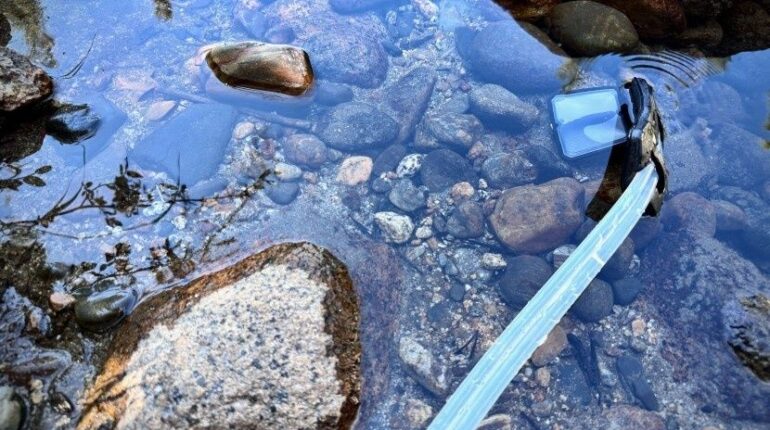
Don’t Crack Your Filter How to Keep Squeeze Filters Working in Freezing Camp Weather
The Silent Hazard Inside Your Pack
Heading into high country after summer? Treat every damp squeeze filter as a piece of freeze-sensitive equipment. Hollow-fiber cartridges contain hundreds of tiny tubes with microscopic pores. When water remains inside those tubes and turns to ice, it expands. The pressure can split fibers or weaken their seals without leaving a visible mark on the cartridge.
That is the dangerous part. A frozen filter may look perfect, squeeze normally, and still allow Giardia, Cryptosporidium, bacteria, or other pathogens through damaged channels. Summer habits are not enough when a warm afternoon gives way to a sub-freezing basin, shaded pass, or cold night. Winter filtration requires a morning-to-night routine: keep the filter warm, control every rest stop, protect it at camp, and carry a backup treatment method.
Why Sub-Freezing Air Ruins Hollow Fibers Instantly
A hollow-fiber filter works through size exclusion. Water moves through the walls of many narrow, porous tubes, while organisms larger than the membrane openings remain outside. Typical backpacking microfilters use pores around 0.2 microns, which are designed to remove bacteria and protozoa such as Giardia and Cryptosporidium. Some purifier systems use smaller pores, around 0.02 microns, for broader pathogen protection. The exact performance depends on the manufacturer and model, so read the cartridge specifications rather than assuming every filter removes viruses.
Freezing attacks the filter from inside. Residual water becomes ice crystals, expands, and pushes against the flexible tube walls and attachment points. A single damaged fiber can create a shortcut around the intended filtration barrier. The water may then flow freely through a defect instead of passing through the membrane pores. Shaking, draining, or blowing through the cartridge can reduce moisture, but these methods do not guarantee that every internal tube is dry. Hidden water remains the problem.
Mountain weather makes this easy to underestimate. The October 22, 2026 report for Rocky Mountain National Park notes increasing overnight and morning temperatures below freezing, with snow and ice becoming more likely at higher elevations. Conditions can vary sharply by elevation, shade, and exposure. Before leaving, check the latest Rocky Mountain trail conditions, then plan for the coldest section of the route, not the trailhead forecast.
- Assume a wet filter can freeze whenever temperatures may fall below 32°F (0°C).
- Keep the cartridge inside your clothing, not in an exterior mesh pocket.
- Protect hoses, dirty-water bags, and threaded connections from ice and slush.
- Do not rely on a shake or a breath as proof that the cartridge is dry.
- Carry chemical treatment or another backup before entering exposed terrain.
Daytime Protocol for Moving Through Cold Basins
An outside mesh pocket is convenient in July and dangerous in a shoulder-season storm. Wind strips heat from the cartridge, while shade and evaporative cooling push it toward freezing. A filter can become colder than the surrounding air when wet. Stopping for lunch beside a shaded snowfield may be enough to turn residual water into ice.
Use body heat as your primary protection. Place the damp cartridge in a sealed bag, then carry it in an inside-facing jacket pocket or another warm layer close to your torso. Keep it there while walking, not only during breaks. A pocket near the chest is usually more reliable than a pants pocket, which may receive less heat as your movement and insulation change. Keep the clean side separate from the dirty bag so grit does not enter the valve or threads.
- Before leaving camp, inspect the cartridge, caps, hoses, and threads.
- Drain the filter after each use, but do not mistake draining for complete drying.
- Seal the cartridge in a leakproof pouch and place it inside your insulating layers.
- At lunch, keep the filter on your body while the pack is open.
- Before treating water, wipe snow and grit from the dirty-bag opening and valve.
- After use, close every cap and return the filter to its warm pocket immediately.
Nighttime Sleeping Protocols Inside the Tent
At camp, place the damp filter inside a sturdy zip-top bag or waterproof pouch. Double-bag it if the cartridge or hose is still wet. This protects your sleeping bag, clothing, and electronics from leaks. It also prevents dirty water from spreading through your sleep system. A clean outer bag matters, especially when the filter has been used in silty meltwater.
Keep the protected cartridge inside the sleeping bag footbox or beside your torso. The goal is to keep it within the sleeping bag microclimate, where your body heat can prevent freezing. A tent vestibule may feel sheltered, but it can still fall well below freezing at high elevation. Never leave a gravity bag hanging outside overnight. Water trapped in its hose and filter can freeze even when the main bag appears protected.
- Do not store the filter in the vestibule, a pack lid, or an outside pocket.
- Do not place a wet cartridge directly against down or sleeping-bag fabric.
- Keep hoses coiled loosely so ice does not stress fittings.
- Check that the filter is still flexible and unfrozen before morning use.
- Use a separate bag for dirty components and clean components.
Field Testing Membrane Integrity and Red Flags
Field testing has limits. Some manufacturers provide an air test for specific cartridges. Cascade Designs instructions for certain hollow-fiber systems describe backflushing the cartridge, removing the clean hose, and blowing air through it. Bubbles or unexpected air passage can indicate broken fibers. However, that procedure is not automatically valid for every squeeze filter. Manufacturer guidance for the exact model takes priority.
Blow-through testing is also easy to misread. An intact, clean filter may resist air strongly. A clogged filter may resist it even more. A damaged cartridge may allow obvious, unusually free airflow, but a small defect may not be detected by a casual breath test. Water flow creates different pressure and viscosity conditions than air flow. There is no universal field test that proves a freeze-exposed cartridge is safe, and dye tests are not dependable because dissolved coloring can be smaller than the particles the filter is designed to remove.
| Observed condition | What it may mean | Action |
|---|---|---|
| Normal resistance and normal flow | The cartridge may be intact, but this does not prove it survived freezing. | Continue only if the manufacturer accepts the test and freezing was avoided. |
| Sudden free airflow or unusually fast flow | Possible broken fibers or damaged seals. | Retire the filter immediately. |
| Sudden loss of flow | Clogging, ice, or another obstruction. | Warm it, backflush as directed, and replace it if damage is possible. |
| Known hard freeze while wet | Internal damage may be invisible. | Replace the cartridge. Do not gamble on a field test. |
| Cracks, leaks, loose fittings, or split tubing | Physical failure is present. | Stop using it and switch to backup treatment. |
The clearest red flag is known exposure. If a wet filter sat in an outside pocket at 9°F (-13°C), or the surrounding water bottle froze nearly solid, treat the cartridge as suspect. A normal squeeze feel cannot restore confidence. When the cost of replacement is measured against several days of gastrointestinal illness in remote terrain, replacement is the practical decision.
Cold Weather Redundant Water Purification Systems
A hollow-fiber filter should not travel alone into freezing backcountry. Carry a backup that does not depend on delicate wet membranes. Chlorine dioxide tablets or drops are lightweight and useful when the filter becomes questionable. Follow the product label exactly. Cold, cloudy, or heavily contaminated water can require longer contact time, and Cryptosporidium may require substantially more time than easier-to-kill organisms. Chemical treatment also does not remove sediment, so prefilter turbid water through a clean cloth or let particles settle first.
Boiling is another dependable option when fuel and time allow. Bring water to a rolling boil, then maintain the process according to current public health guidance and your stove system”s instructions. Boiling can be especially useful at camp because it also provides hot drinks and meltwater. Remember that melting snow requires fuel and produces less water than expected. Add snow gradually to a pot of liquid water instead of packing a pot full of dry snow, which can scorch the container and waste fuel.
For broader wilderness water guidance, review the CDC hiking and camping water guide. Near-freezing water deserves extra caution because chemical reactions slow in the cold, extending the required contact time. If the label gives a temperature adjustment, use it. If the water is extremely cold and the timing is uncertain, warm it first when practical, or boil it. Never shorten treatment because the source looks clear.
- Carry enough chlorine dioxide for the entire route, plus an emergency margin.
- Keep tablets and drops warm and dry so the instructions remain readable.
- Use a clean container for chemically treated water and respect the full contact time.
- Boil when the filter is suspect and fuel availability makes it practical.
- Do not combine methods casually; follow the instructions for each product.
Protect Your Filter to Protect Your Gut
The non-negotiable rule is simple: a damp hollow-fiber cartridge stays attached to body heat whenever freezing air is possible. Keep it inside your jacket during trail time, protect it during breaks, and place it inside your sleeping bag at night. Inspect the entire system, including hoses, valves, caps, and threads. A warm filter is useful gear. A frozen filter is an unknown risk.
- Check the forecast, elevation, shade, and overnight temperatures before departure.
- Pack the filter inside a sealed pouch and carry it in an interior clothing pocket.
- Bring a backup treatment method, with enough capacity for the full trip.
- Replace any cartridge that may have experienced a hard freeze while wet.
- When doubt remains, choose replacement over illness in the backcountry.
That discipline takes little space and adds no complicated technology. It simply turns a vulnerable piece of gear into a managed system. Protect the filter, protect the water, and protect the days you planned to spend on the trail.


