When the Trail Suddenly Shrinks
You round a blind curve in thick Colorado willows and the trail seems to vanish. A dark bear stands ahead, or a moose fills the corridor between spruce trunks. Your heart rate jumps. Your hands tighten on the trekking poles. The next few seconds feel strangely slow.
This is where vague advice such as “stay calm” stops being enough. Dense timber and willow bottoms shorten sightlines, hide escape routes, and make species identification difficult. Adrenaline pushes you toward two dangerous reflexes: running from a bear or standing your ground against a charging moose. The safer response begins with a fast posture check. In the first ten seconds, identify the animal, read its stance, and choose the response that matches the threat.
Seconds 1 to 3 Freeze Identify and Gauge Stance
First, lock down your motor instincts. Stop moving, but do not drop your pack, poles, or camera. Do not spin around. Do not sprint. Keep your body angled slightly rather than presenting a sudden, aggressive square stance. Take one controlled breath and use the pause to establish what is in front of you.
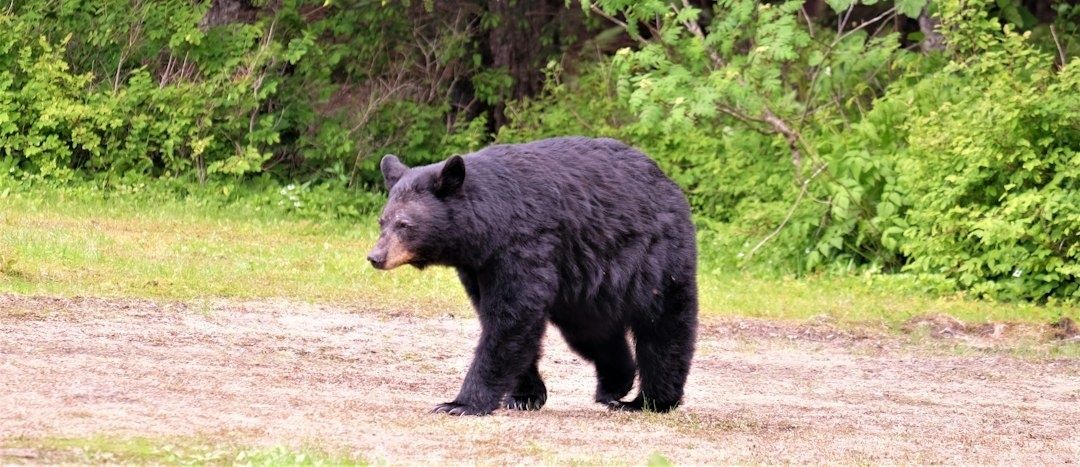
With a black bear, look for the difference between curiosity, defensive tension, and predatory focus. A curious bear may stand on its hind legs to improve its view or scent, circle downwind, open and close its mouth, or pace. That behavior does not automatically mean an attack. Defensive tension is more serious. Salivation, huffing, jaw popping, ground swats, stomping, head swinging, stiff legs, and a lowered head can mean the bear wants more distance. A silent bear that deliberately stalks, circles, or zigzags toward you is a different problem and requires a more forceful response.
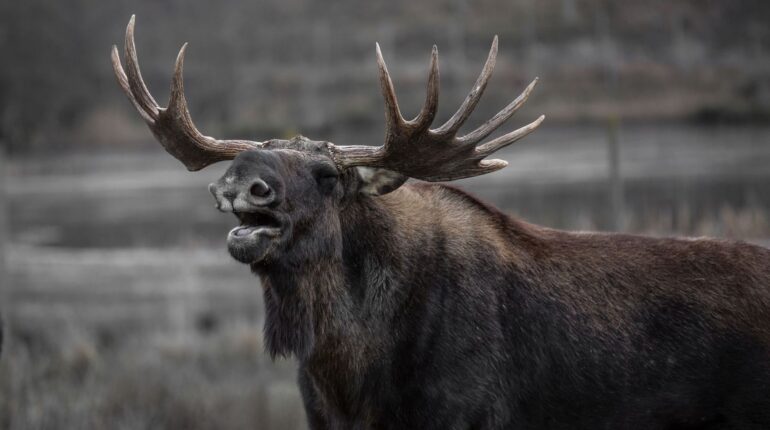
Now scan the moose from nose to hooves. A relaxed animal may simply watch you or continue feeding. An agitated moose can lay its ears flat, raise the hair along its neck, lower or toss its head, sway, lick its snout, cock its head, or show the whites of its eyes. Bulls deserve extra caution during the fall rut. Cows can become defensive around calves from late spring through summer. Colorado Parks and Wildlife advises giving moose substantial space, and the agency notes that they can run up to 35 miles per hour.
- Find your buffer: Identify the nearest substantial tree, boulder, stump, or dense timber that could interrupt a charge.
- Check the ground: Note roots, loose rock, steep slopes, deadfall, and narrow gaps that could trip you.
- Protect the group: Bring children close, leash dogs, and gather hikers together without crowding the animal.
- Read the route: Keep a retreat path open before you make any deliberate movement.
Distance is your first defense. The right buffer depends on visibility, terrain, wind, and the animal”s behavior. If the animal changes its behavior because of your presence, you are too close. Official Bear Safety guidance from Glacier National Park emphasizes staying alert, avoiding approaches, making your presence known in bear country, and keeping deterrent spray accessible.
Reading the Threat Signals Side by Side
Bear and moose encounters look similar only from a distance. Both animals may freeze, stare, or move suddenly. Their safest responses are not the same. A black bear usually needs you to appear calm, human, and difficult to surprise. An agitated moose needs you to create distance quickly and place solid cover between your body and its hooves.
| Animal and behavior | Common signals | Your immediate priority |
|---|---|---|
| Black bear, curious | Standing upright, pacing, ears forward, mouth opening and closing | Speak calmly, avoid sudden movement, and prepare to back away |
| Black bear, defensive | Huffing, jaw popping, stomping, ground swats, lowered head, bluff charge | Hold position during the display, do not run, and retreat slowly when able |
| Black bear, predatory | Silent stalking, circling, focused approach, little visible stress | Seek shelter if possible, use deterrent, and fight back if attacked |
| Moose, agitated | Laid-back ears, raised neck hair, lip licking, swaying, head lowering, visible eye whites | Back away, then run to substantial cover if it charges |
| Moose, defensive | Calf nearby, territorial bull, ground disturbance, sudden approach | Give the animal a wide route and avoid blocking its movement |
A bear bluff charge is designed to intimidate and commonly stops short. Warning signs can include teeth clacking, paw pounding, huffing, and ears pinned back. Hold your ground during the charge, then back away slowly while speaking in a calm voice. A predatory approach is quieter and more deliberate. Do not assume silence means safety. A focused bear that keeps closing distance without obvious fear is more dangerous than a noisy defensive bear.
Moose can escalate quickly, and they do not always provide a long warning display. Head lowering, stomping, lip licking, raised hair, and pinned ears are clear reasons to increase distance. Misreading a moose as merely curious can leave you trapped in a narrow willow tunnel. Misreading a defensive bear as a target to chase away can also escalate the encounter. Watch the animal”s behavior, not just its size or species.
Seconds 4 to 7 Deploy Your Defense Mechanism
By seconds four through seven, your goal is controlled readiness. If you carry bear spray, it should already be mounted on a chest rig or hip belt where either hand can reach it. Do not bury it inside a pack. Do not leave it in a side pocket covered by a rain shell. A deterrent that takes thirty seconds to find is not an immediately available deterrent.
Keep your eyes on the animal while your hand finds the canister. Remove the safety clip only when the bear is closing distance or showing threatening behavior. Maintain a peripheral view of companions, calves, cubs, and the terrain behind you. Wind matters in alpine willow bottoms and timber draws. A strong crosswind can shift the spray cloud, while a headwind can push it back toward you. Bear spray is for an oncoming bear”s face, not for equipment, tents, clothing, or trail surfaces. The USDA Forest Service bear encounter guidance also stresses preparation, calm behavior, and keeping spray accessible.
- Touch the canister: Confirm its position without looking down.
- Orient the nozzle: Point it toward the approaching bear while keeping fingers clear of the trigger until needed.
- Read the wind: Check grass, willow leaves, loose dust, or falling snow for drift direction.
- Use your voice: Speak in a low, steady cadence. Say, “Hey bear, you are safe, move away.” Avoid shrieking or rapid, erratic yelling.
- Keep moving deliberately: With a bear, prepare to stand firm. With a moose, angle toward cover without turning your back.
Noise is useful before a surprise encounter, especially near blind corners, running water, and thick vegetation. Call out, clap, or talk with companions so animals can detect you before you are close. Once a bear is present, however, your voice should sound human and controlled, not like a challenge. Keep the group together. A scattered group looks smaller and makes it harder to track the animal”s position.
Seconds 8 to 10 The Escape Divergence
This is the moment when the species-specific decision matters most. Against a black bear, stand your ground. Do not run, climb a tree, or turn your back. Speak calmly and make yourself identifiable as a person. If the bear makes a bluff charge, hold position during the rush. When it stops or turns away, back out slowly and give it a wide route.
If a bear attacks, the response depends on the behavior and species. For a black bear attack, fight back forcefully with bear spray, trekking poles, rocks, or any available object. If the bear is stalking or acting predatory, seek shelter if possible and resist aggressively. Guidance for grizzly or brown bear attacks can differ, especially during a defensive encounter, so learn the local species and park rules before trail time. Report serious encounters to park authorities or wildlife officials after reaching safety.
Against an agitated moose, do the opposite. Break the visual line of sight and run behind a large tree, boulder, or other solid object. Moose can sprint faster than a person, so do not rely on endurance or a straight-line race. Use terrain. Cut behind timber, change direction around obstacles, and keep moving until the animal stops pursuing. If a moose blocks the trail but is not charging, retreat and wait or choose another route. Do not approach to force it away.
- If a calf appears: Assume the cow may be nearby. Increase distance immediately and never move between them.
- If bear cubs appear: Expect the sow to defend them. Do not approach, photograph closely, or move toward the cubs.
- If a dog is present: Keep it leashed. Moose may perceive dogs as wolves and respond aggressively.
- If contact occurs: For a moose, keep trying to reach cover and protect your head if knocked down. For a black bear attack, fight back forcefully.
After the immediate danger passes, move to a secure location before checking injuries, equipment, or phone service. Do not return to the animal to retrieve dropped gear. Note the location, species, direction of travel, and behavior from a safe distance. Serious conflicts should be reported to 911 when immediate danger remains, or to the appropriate park or state wildlife agency afterward.
Master Your Backcountry Reflexes Before You Hit the Trailhead
Split-second encounters reward practiced muscle memory more than raw instinct. Before a run or hike, complete a simple gear check. Put bear spray where your hand can find it without looking. Practice removing the safety clip. Scan likely cover along the trail. Talk through the bear response and the moose response with every member of the group, including what changes when cubs or calves enter the scene.
Make the rule simple: stand firm against a bear, but get behind physical timber against an agitated moose. Stay alert in willow bottoms, around blind bends, and near food sources. Keep dogs controlled, secure food and trash, and give wildlife time to leave. Respectful distance protects you, protects the animal, and helps keep Colorado”s high-country trails open for the next trip from trailhead to home base.